
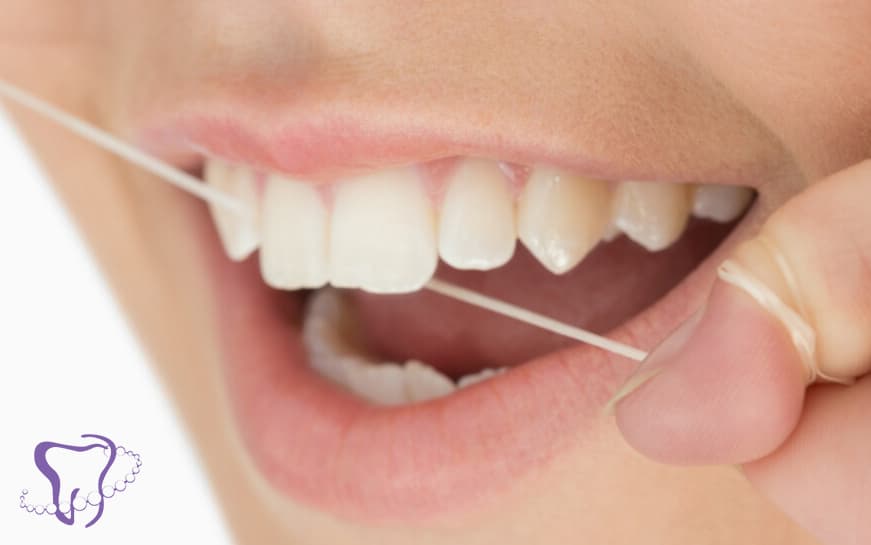
Dental floss is an important part of oral hygiene because it reaches areas between the teeth where a toothbrush cannot easily reach.
There are many bacteria in the mouth that contribute to plaque, gingivitis, tooth decay, and periodontal disease. Brushing alone is not enough to fight them.
Cut about 50 cm of floss and wrap one end around the middle finger of one hand and the rest around the middle finger of the other hand.
Hold the floss firmly between your index fingers and thumbs, leaving a stretched section of about 3-5 cm.
Pass the floss gently between two teeth without sudden or forceful movements.
Press the floss lightly until it reaches the gums and stop when you meet resistance.
Clean both neighboring tooth surfaces by shaping the floss around the tooth and moving it from the gums toward the top of the tooth.
Move to the next interdental space and continue cleaning all teeth, including the back teeth.
Daily flossing, together with proper brushing, helps remove dental plaque and supports fresher breath and healthier gums.